Why Corrugated Metal Pipe (CMP) Remains a Top Choice for Drainage and Infrastructure
A Workhorse of Modern Infrastructure
When I first started working on drainage projects in Java back in the early 2000s, the default culvert material was always concrete. It was heavy, it cracked during transport, and installation crews often spent hours just getting the sections aligned. Then, on a highway job near Bekasi, we switched to Corrugated Metal Pipe (CMP) for a major water channel crossing. That experience changed how I think about underground drainage systems. The pipe arrived on site in manageable lengths, two workers could roll it into the trench, and we backfilled the same day. That kind of speed matters when you are trying to keep a road construction project on schedule.
Corrugated Metal Pipe (CMP) has been around for decades, but its engineering keeps improving. The basic idea is simple: take a flat sheet of galvanised steel, roll it into a tube, and form annular or helical corrugations into the walls. Those corrugations boost the pipe's stiffness without adding extra material, which makes the pipe both strong and relatively light. That combination of strength and weight is why you see CMP used for everything from highway culverts and industrial drainage to sewer pipes and soil erosion control channels under rural roads. It is not a niche product; it is a standard solution that has earned its place in specifications worldwide.
How CMP Is Made and Why It Lasts
Manufacturing CMP starts with steel that has already been galvanised. The hot-dip galvanisation process bonds a layer of zinc to the steel surface, creating a barrier that resists corrosion. For most buried installations, that zinc coating alone gives the pipe decades of service life. In more aggressive environments, manufacturers can apply a polymer coating over the galvanised layer for additional protection. The steel is then fed through a corrugator that forms the characteristic wave pattern. That corrugation profile is not just for show; it increases the pipe's ring stiffness by a factor of ten or more compared to a flat sheet of the same gauge. The final step is to form the sheet into a pipe and seal the longitudinal seam with a lock or a helical lock seam.
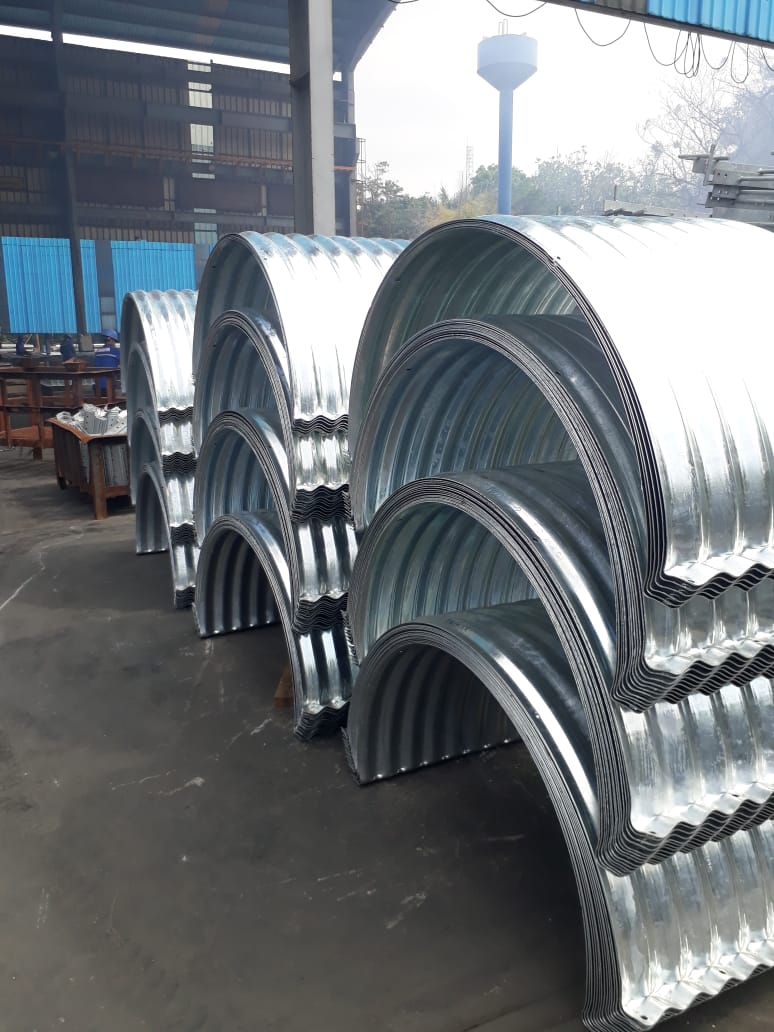
One of the reasons I prefer CMP for large-diameter applications is the ability to vary wall thickness and pipe diameter independently. A contractor can order a heavy-duty pipe with thick walls for a deep-burial culvert under a haul road, or a lighter gauge for a shallow stormwater channel. That flexibility is hard to match with rigid materials. PT Primari Inrahm Utama, a manufacturer based in Bekasi, produces CMP with SNI certification and TKDN certification, which ensures the product meets Indonesian national standards for quality and local content. That kind of certification gives engineers and project owners confidence that the pipe will perform as expected.
Installation Advantages That Save Time and Money
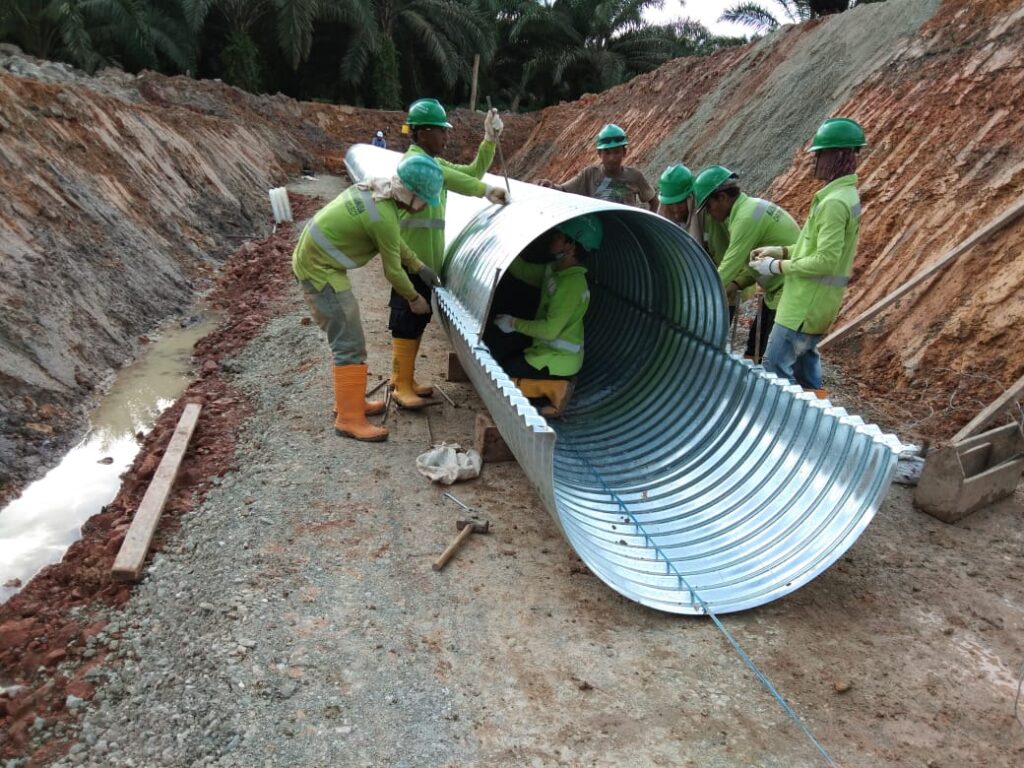
Anyone who has tried to set a heavy concrete culvert section into a muddy trench knows the frustration. The crane slips, the section cracks, the bedding gets disturbed. With CMP, the installation is simpler. The pipe sections are light enough to be handled by a small excavator or even manually for smaller diameters. The flexibility of the steel allows the pipe to conform slightly to the trench bed, which reduces point loading and the risk of damage. Backfill can be placed and compacted in lifts, and the pipe's inherent strength carries the load.
There is also the connection system. Most CMP uses a simple coupling band with a rubber gasket that creates a watertight joint. On a recent industrial drainage project in a factory complex, we needed to join several hundred metres of 1200 mm diameter pipe. The crew completed the entire run in three days, including joint testing. A concrete pipe of the same size would have taken more than a week, with additional labour for mortar joints and curing time. The project owner was pleased, and the drainage system has been performing without issues through two wet seasons.
Where CMP Fits in the Bigger Picture
Infrastructure projects in Indonesia are expanding rapidly, from new toll roads in Sumatra to drainage networks in industrial estates. The materials chosen for these projects affect not only the construction cost but also the long-term maintenance burden. CMP offers a balance of initial affordability and durability that makes it a sustainable material choice. The steel is recyclable at the end of its service life, and the manufacturing process has a lower carbon footprint than cement-based alternatives. For a country that is investing heavily in road construction and water management, that matters.
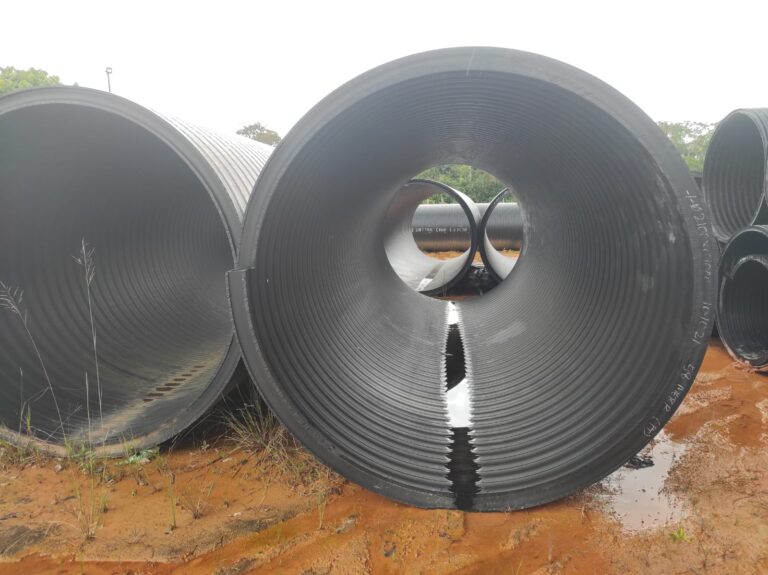
Corrosion resistance is often the first concern engineers raise about steel pipe. It is a valid question. But modern CMP with hot-dip galvanisation and, where needed, polymer coatings has proven itself in field installations that are now 50 to 70 years old. The key is proper design: selecting the right coating class for the soil and water conditions, ensuring good drainage around the pipe, and avoiding aggressive chemical environments. When those factors are addressed, CMP matches or exceeds the service life of concrete in most drainage applications.
Practical Considerations for Specifiers
If you are evaluating CMP for your next project, here are a few things to keep in mind:
- Check the pipe diameter and wall thickness against your load requirements. A structural design guide from the manufacturer will give you the allowable fill heights for each gauge.
- Choose the coating type based on the environment. Standard galvanised coating works for most agricultural and highway drainage. For acidic soils or industrial drainage, add a polymer coating.
- Verify that the product carries SNI certification and TKDN certification if the project is subject to local content regulations. This is especially important for government-funded infrastructure projects.
- Consider the corrugation profile. Helical corrugations give a smoother interior surface, which improves hydraulic flow, while annular corrugations offer higher stiffness for deep burial.
- Plan the bedding and backfill carefully. Even the best pipe will fail if the supporting soil is poorly compacted or contains large rocks that can puncture the coating.
Real-World Performance in Drainage Systems
I have seen CMP used in a wide range of settings: as a sewer pipe in a municipal wastewater system, as a water channel for irrigation in rice paddies, and as a heavy-duty pipe for stormwater management under a major highway. In every case, the material performed as the design predicted. The flexibility of the pipe actually helps in seismic areas, where rigid culverts can crack during ground movement. That is a real benefit in a region like Indonesia, where earthquakes are a recurring risk.
Soil erosion control is another area where CMP excels. On a hillside development project, we used large-diameter CMP culverts to channel runoff away from slopes that were prone to sliding. The pipe sections were anchored with concrete headwalls at the inlet and outlet, and the corrugated surface helped dissipate energy in the flow. After several heavy rain events, the culverts were intact and the slopes remained stable. That kind of reliability is what keeps engineers coming back to CMP for erosion-sensitive sites.
The Case for Choosing CMP
When I talk to young engineers about drainage materials, I encourage them to look beyond the first cost and consider the whole-life performance. CMP may not be the right choice for every site, but for the majority of road construction and industrial drainage applications, it is a proven, cost-effective, and long-lasting option. The availability of certified products from local manufacturers like PT Primari Inrahm Utama in Bekasi makes it even more attractive for projects in Indonesia. With proper specification and installation, Corrugated Metal Pipe (CMP) delivers the kind of performance that keeps water where it belongs and projects on budget.